Media Theories
Media theory is a discipline and field of study that deals with the content, history and effects of various media; in particular, the 'mass media'.There are many different types of media theories that people come up with to either prove something or look at statistics and trends. Media theorists come up with ideas you try and prove why something occurs during various movies films. For example Olumde Levi was a French anthropologist. He believed that humans brain relates every term with others that had an opposite meaning. It can be found in any movie. e.g Maleficent.
Todorov's Narrative theory
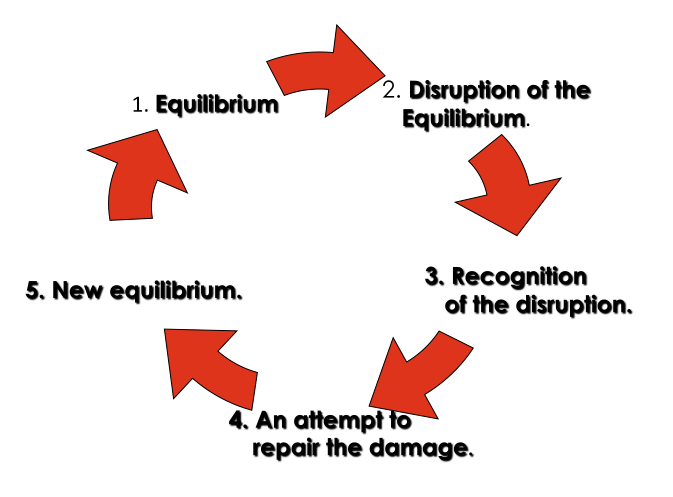
 In 1969 Todorov produced a theory which he believed to be able to be applied to any film. He believed all films follow the same narrative pattern. They all went through stages called the equilibrium, disequilibrium. acknowledgement, solving and a NEW equilibrium.
There are five stages the narrative can progress through:
1. A state of equilibrium (All is as it should be.)
2. A disruption of that order by an event.
3. A recognition that the disorder has occurred.
4. An attempt to repair the damage of the disruption.
5. A return or restoration of a NEW equilibrium
Laura Mulvey's Narrative theory
The theory suggests that the male gaze denies women human identity, relegating them to the status of objects to be admired for physical appearance. Visual Pleasure Mulvey states that the role of a female character in a narrative has two functions:
1.As an erotic object for the characters within the narrative to view.
 2.As an erotic object for the spectators within the cinema to view.
Key theorists beliefs Jonathan Schroeder (1998) “to gaze implies more than to look at – it signifies a psychological relationship of power, in which the gazer is superior to the object of the gaze.”
Two distinct modes of the male gaze of this era:
-Voyeuristic (an obsessive observer of sordid or sensational subjects)
 -Fetishistic (excessive attention or attachment to something).
 CLASSIC HOLLYWOOD NARRATIVES
Classical Hollywood narratives is a dominnt form of storytelling in Cinema that was introduced sometime between the 1920's to 1930's . A character has certain traits and reacts to certain situations as an agen of action and decisions. A style determines how the film is organised with the elements of story , sets, scenes, shots and sounds. Mis-en-scene is the arrangement of space , to 'place on stage', the characters, props and lighting. Genre is a standard formula for a particular kind of story. A plot is the sequence of actions in chronological order.

VLADIMIR PROPP- CHARACTER TYPES
Vladimir Propp was a literacy critic and a scholar whp founded the idea that a certain type of character was to be used in evert narrative structure. Propp suggested that every narrative has eight different character types these characters are the villans, the dispatcher, the (magical) helper, the princess or prize, her father, the donor, the hero or victim and false heros. In a struggle scene Vladimir Propp suggested this theory- There is a Struggle between the hero and the villian.
-The hero is branded.
-The villan is overcome.
-The state of disorder is settled

Barthes' Main Thriller Codes
Barthes’ Enigma Hermeneutic Code can be found in a majority of music videos. The narrative will establish enigmas (puzzling imagery or occurrences) or mysteries as it goes along. Essentially the narrative functions to first establish then solve. It can be read and understood in different waysand left without an answer.
The Semantic Code is the code that refers to connotation within the story that gives additional meaning over the basic denotative meaning of the word. It is by the use of extended meaning that can be applied to words that authors can paint rich pictures with relatively limited text and the way they do this is a common indication of their writing skills.
The Symbolic Code is a very similar code to the Semantic Code, but acts at a wider level, organizing semantic meanings into broader and deeper sets of meaning.This is typically done in the use of antithesis, where new meaning arises out of opposing and conflict ideas.
The Hermeneutic Code refers to any element of the story that is not fully explained and hence becomes a mystery to the reader. The purpose of the author in this is typically to keep the audience guessing, arresting the enigma, until the final scenes when all is revealed and all loose ends are tied off and closure is achieved.